Linda’s Ongoing Soma Holiday
Brave New WorldLinda’s Ongoing Soma Holiday is the extended drug-induced retreat Linda begins after returning to the World State, where soma lets her escape the discomfort of her changed body and the memories of life on the Reservation. The holiday becomes continuous: Dr. Shaw permits doses of up to twenty grammes a day despite knowing that the drug will likely kill her within months. Linda is kept comfortable, but increasingly detached from the world and from John, who objects to the treatment and later witnesses her fatal respiratory crisis. Her private refuge thus exposes the cost of a society that treats emotional ease as a substitute for living through pain, aging, and loss.
Return to Soma
After Linda comes back to London, the return to civilization means, for her, access to soma and the chance to remain in bed taking one holiday after another. The drug frees her from the unpleasant aftermath of peyotl and from the everyday discomforts she associates with waking life. Instead of accepting the return of those discomforts between doses, she clamors for larger and more frequent amounts, and Dr. Shaw eventually allows her as much as twenty grammes a day.
The resulting escape is not incidental or occasional. Dr. Shaw tells Bernard that this dosage will probably finish Linda off in a month or two, when her respiratory center is paralyzed and she can no longer breathe. His warning makes the bargain explicit: soma gives Linda the experience of repeated holidays while shortening her remaining life. He argues that the drug also lengthens her life in a different sense, because each holiday supplies an immeasurable duration outside ordinary time.
A Managed Existence
John objects that giving Linda so much soma is shortening her life. Dr. Shaw admits that it is, but frames the loss as acceptable because Linda has no serious work to do and the drug keeps her from suffering. John persists that the arrangement is not right, yet ultimately has to give in. The decision is presented not as a cure or recovery, but as permission for Linda to remain sedated rather than face the distress that the available alternatives would entail.
Linda thereafter remains in a small room on the thirty-seventh floor of Bernard’s apartment house. She lies in bed with the radio and television on, a patchouli tap dripping nearby, and soma tablets within reach. The description draws a distinction between her physical presence and her mental absence: she remains in the room, but is repeatedly away on holiday. Familiar sounds and sensations are transformed in her drugged experience, becoming parts of a private dream-world in which she can feel contentment without returning to ordinary life.
John’s Visit and Linda’s Death
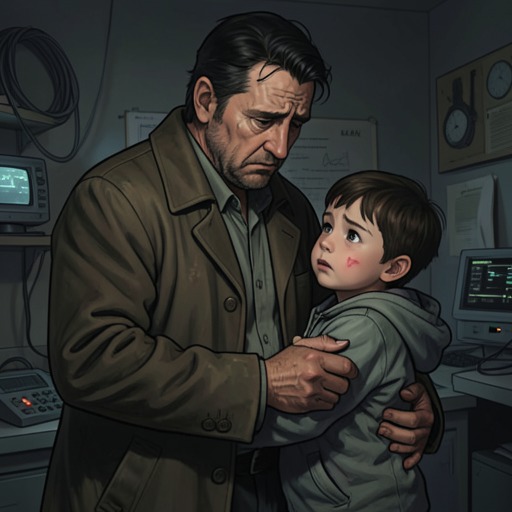
When John visits Linda in the hospital, she is watching a television broadcast of a tennis championship. Her expression is vacant and contented; she drifts toward sleep, then wakes again to the television, music, and scent around her. The narrative stresses that these things reach her less as ordinary surroundings than as elements of a dream embellished by soma. The hospital setting makes her isolation visible: John sits beside her, but the world holding her attention is inaccessible to him.
When John tries to make her recognize him, Linda briefly knows him as her son but misreads his presence through the dream-world shaped by her drugged memories. He becomes, in that confused perception, an intruder into the holiday she associates with Malpais and Pope. As her breathing fails, she struggles to draw air and cannot call out. John bends over her and asks what is wrong, seeking reassurance, but her terrified look gives way to the respiratory crisis Dr. Shaw had predicted.
Comfort, Control, and Loss
Linda’s holiday is a personal refuge and a product of the World State’s social arrangements. The society makes soma readily available as a means of emotional management, while Dr. Shaw’s reasoning treats the time it provides outside ordinary experience as a sufficient counterweight to the years it may take away. Linda’s experience is therefore neither simple pleasure nor an uncomplicated medical intervention: the drug protects her from distress by keeping her removed from the conditions of her life, and that removal culminates in death.
The episode also contrasts Linda’s escape with John’s insistence that the decision is wrong. His objection does not prevent her continued dosing, and his presence cannot break through the altered perceptions that separate them at the end. What the World State calls a holiday thus becomes a form of disappearance within life: Linda remains physically present, yet increasingly unavailable to her son, until the temporary escape that Dr. Shaw sanctioned becomes final.